This case review examines the queue design for Dragonwatch at Toverland, an attraction park in the Netherlands. The review focuses on how the themed waiting environment structures guest movement, communicates pacing cues, and mediates the transition from park pathway to attraction boarding zone. The review is observational and does not evaluate the ride itself.
- Dragonwatch is an attraction at Toverland, a theme park in Horst aan de Maas, North Limburg, Netherlands.
- Toverland is a themed park that has expanded significantly since the mid-2010s, adding immersive themed lands with consistent environmental design.
- Dragonwatch is a fantasy-themed attraction targeted at a family audience.
- The queue environment observed in available documentation features enclosed and semi-enclosed themed waiting spaces rather than open-air switchback fields.
- Queue design at Toverland has received editorial attention in the European theme park sector for its integration of theming throughout the wait path rather than only at the attraction facade.
Queue entry and threshold design
The transition from Toverland's general circulation path into the Dragonwatch queue represents a deliberate threshold. The entry point is not simply a queue post with a sign — it is an architectural or environmental marker that signals to guests that they are crossing into a different narrative space.
In European parks that invest in queue theming, this threshold design serves a specific function: it separates the casual park visitor from the committed queue participant. A guest who passes through a defined threshold has made a decision to enter this specific queue, which is psychologically distinct from a guest who drifts into an unmarked queue area. The commitment implied by a threshold also reduces the rate at which guests exit the queue partway through the wait.
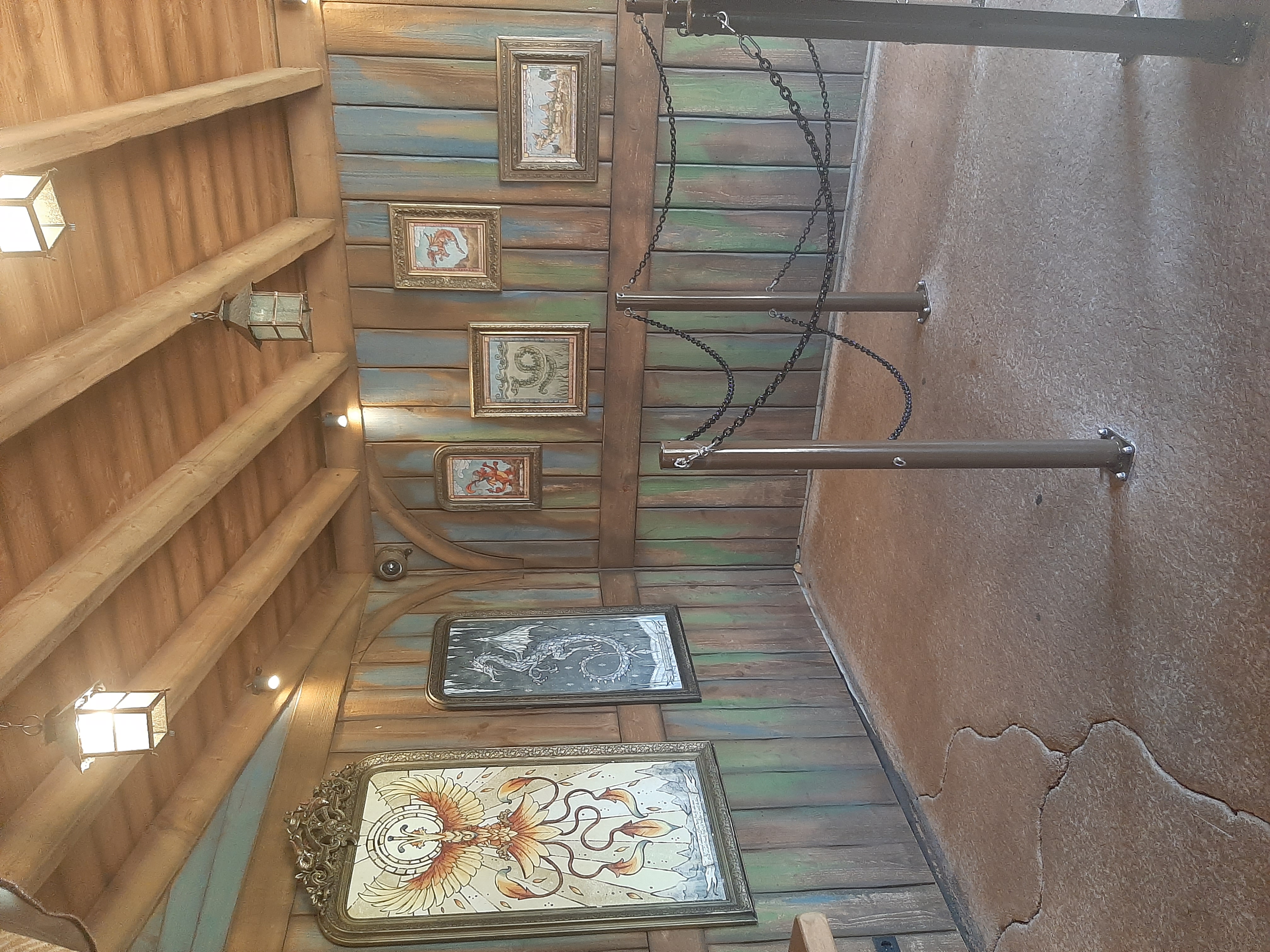
Dragonwatch queue — Toverland, Netherlands. Image: Mw007 / Wikimedia Commons
Theming as a pacing mechanism
The most direct function of queue theming as a pacing mechanism is attention management. A guest with objects, surfaces, and sounds to attend to is a guest who is not calculating wait time in the same way as a guest standing in a plain corridor. This is not manipulation — it is a straightforward application of the insight that perceived time and measured time differ significantly depending on environmental conditions.
In Dragonwatch's queue, the themed elements observed in available documentation include structural elements referencing a fantasy castle or fortification environment, combined with surface treatments and object placements consistent with a dragon mythology theme. These elements provide something to look at without providing a passive entertainment screen — guests are reading the environment rather than consuming content delivered to them.
The distinction matters for pacing: environment-reading is self-directed and non-linear, which means different guests in the same queue section will occupy their attention differently and for different durations. This heterogeneity prevents the queue from feeling like a collective countdown.
Capacity cues and wait communication
Guests in a queue receive capacity information from multiple sources simultaneously. Posted wait time signs are the explicit source; the observable length of the queue ahead, the frequency of ride dispatches visible from the queue path, and the speed of guest movement through the switchbacks are all implicit sources that guests read continuously.
In Toverland's Dragonwatch queue, the enclosed portions of the wait path limit the implicit capacity information available to guests. A guest who cannot see the loading platform or the extent of the queue ahead has fewer sources from which to calculate a wait estimate. This can work in either direction — it can make the wait feel less daunting because the full length of the line is not visible, or it can create anxiety because guests cannot read progress cues.
Parks that manage this well tend to offer partial sightlines — enough visual access to the station area to confirm that the queue is progressing, without exposing the full queue length to guests who have just joined.
Boarding zone design
The boarding zone for Dragonwatch represents the final pacing layer. Once guests enter the station, the speed of guest movement is no longer a function of queue environment design — it is a function of the boarding system and operator management. The themed environment in the station can still contribute to experience, but the primary driver of pace is the vehicle boarding sequence.
For family-oriented attractions like Dragonwatch, the boarding zone design typically accommodates groups of varying sizes — families with young children, guests with mobility considerations, and guests unfamiliar with the specific boarding protocol. Platform design that accommodates this variation without creating bottlenecks requires attention to row channel width, distance from the platform edge to the vehicle, and operator positioning.
Guest flow observations
From the available documentary evidence of the Dragonwatch queue, the following observations can be made about guest flow patterns:
The queue path uses a combination of enclosed and semi-enclosed segments, which creates natural transition points in the guest experience. Each transition from one environment register to another functions as an informal marker of progress — even without explicit wait time communication, guests know they have moved through a section of the queue.
The width of the visible queue path in documentation suggests a two-to-three abreast arrangement, which is standard for family attractions at this scale. This width accommodates group movement without creating the single-file bottleneck that narrower queue paths produce.

Herald square — Efteling. Shown for reference to open plaza guest distribution in European parks. Image: Magafuzula / Wikimedia Commons
- Actual wait time data or throughput figures for Dragonwatch.
- The ride content itself or the boarding sequence beyond the station approach.
- Comparisons of Toverland's approach to other Dutch theme parks.
- Seasonal queue variations or temporary queue extensions.
- Guest satisfaction with the queue experience.

