Joris en de Draak at Efteling is a racing wooden coaster — two trains operating simultaneously on parallel tracks that interact dramatically during the ride. This case review examines how the dual-train racing format creates a specific boarding rhythm challenge, and how the station and queue design address the need to load two trains simultaneously while maintaining guest flow.
- Joris en de Draak is a duelling wooden roller coaster at Efteling in Kaatsheuvel, Netherlands, opened in 2010.
- The ride operates two parallel tracks — one themed to fire (Joris) and one themed to water (de Draak/the Dragon). Both trains dispatch simultaneously and interact during the circuit.
- The racing format requires coordinated dual loading — both sides must be loaded and ready to dispatch at the same moment for the racing element to work as designed.
- Efteling is one of the oldest and most visited theme parks in Europe, known for high standards of themed environment design throughout the park.
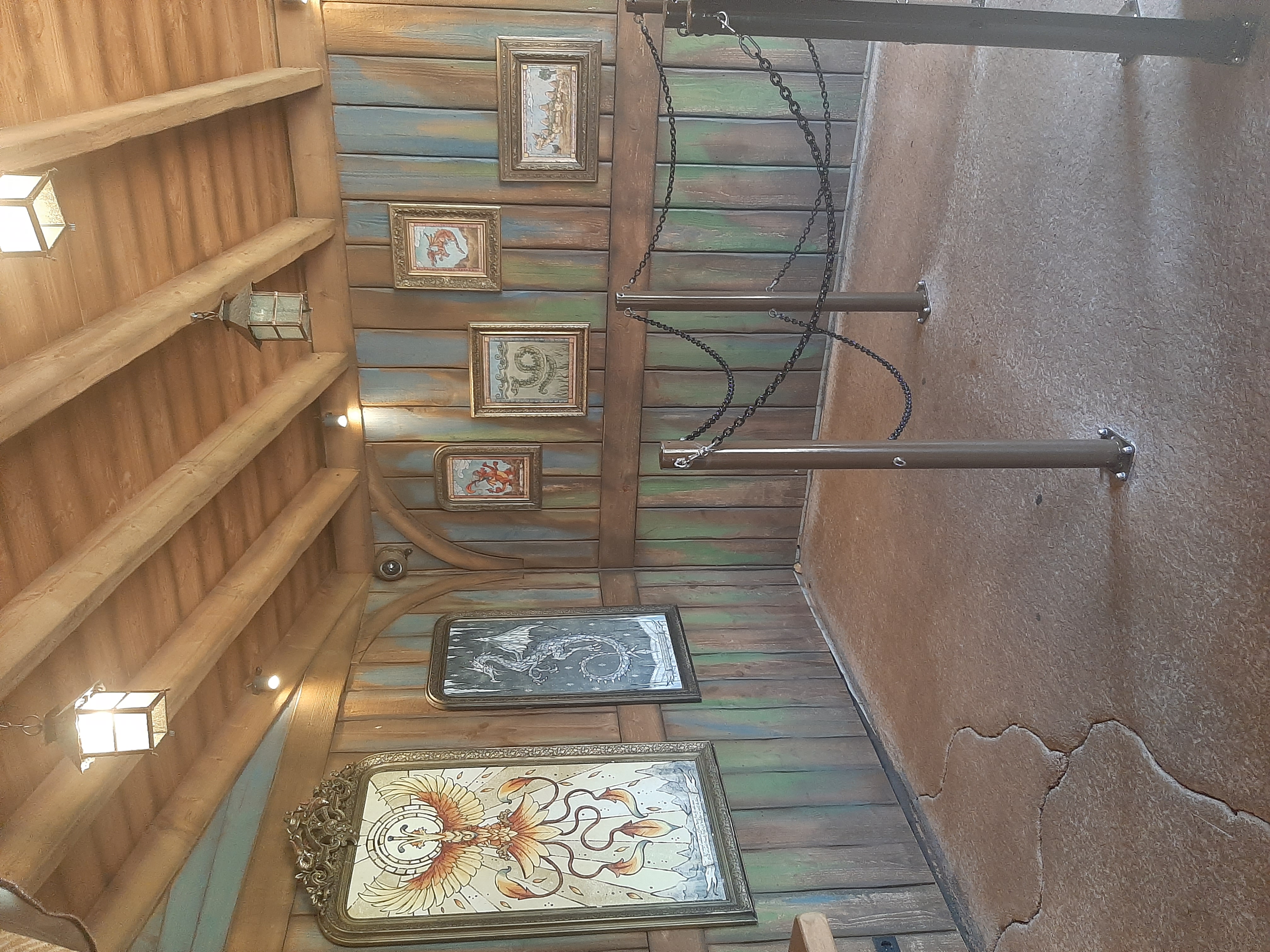
- The queue for Joris en de Draak includes both outdoor and partially enclosed sections.
The racing coaster boarding challenge
A racing coaster creates a specific operational challenge that single-track attractions do not face: for the race to function correctly, both trains must be dispatched at approximately the same moment. If one side loads faster than the other, the operator must either hold the faster side — reducing throughput — or dispatch the trains at different times, which eliminates the racing element that guests expect from the attraction design.
This challenge is compounded by the natural variance in group composition. A party of four adults can load quickly; a family with a toddler, a pram that must be stored, and a child requiring height measurement loads slowly. In a single-track station, a slow-loading group holds up only the train immediately behind them. In a racing coaster station, a slow-loading group on one side can hold up both trains simultaneously.

Joris en de Draak station — Efteling, Netherlands. Image: Christophe95 / Wikimedia Commons
Queue split and side selection
The queue for Joris en de Draak splits into two streams — one for each side of the duelling track. The point at which the queue splits, and how that split is managed, is a design decision with significant implications for the racing format and for guest experience.
If guests are allowed to freely choose their side at the split, the distribution will be uneven — one side (typically the one perceived to be more exciting, or simply the one on the guest's preferred walking side) will attract more guests. Uneven distribution disrupts the dual-loading balance and can create a situation where one side has a significantly longer effective wait than the other.
Parks typically address this through explicit routing at the split — operators directing groups to the shorter side, or physical queue channels that prevent guests from passing to a perceived faster side. The visual presentation of the split communicates the fairness (or otherwise) of the selection process to guests, which affects their willingness to accept the side they are directed to.
Station design for dual loading
The station for Joris en de Draak is a dual-platform structure — one platform for each track side — within a single enclosed building. This allows operators on both sides to communicate visually and coordinate dispatch timing. The platform layout places the two loading zones in close proximity, which is structurally important for the racing dispatch.
Both trains are visible from each platform, which gives guests on each side a sight line to the competing train during loading. This visibility is part of the racing experience — the sight of the other train loading creates anticipation and a mild competitive awareness even before dispatch.
Capacity and pacing implications
The dual-track format has capacity implications that differ from the arithmetic of simply doubling a single-track coaster. In theory, two tracks should deliver twice the hourly throughput of one track. In practice, the coordination requirement introduces constraints: both sides must load simultaneously, which means throughput is limited by whichever side loads more slowly at each dispatch cycle.
Queue design that supports rapid, accurate loading on both sides simultaneously — clear row channelling, accessible restraint mechanisms, efficient guest flow from gate to seat — directly affects the effective capacity of the attraction. Design factors that slow either side affect the system as a whole, not just the affected track.
Efteling's approach to queue environment
Efteling is notable among European parks for the consistency of its themed environment across all areas of the park, including queue paths. The wider park environment — a fairytale forest, structured pathways, tonal consistency in surface materials and sound design — means that the Joris en de Draak queue begins in an environment that is already thematically established before guests reach the ride-specific queue entry.

Herald square — Efteling. The park's consistent environmental design extends beyond individual attraction queues. Image: Magafuzula / Wikimedia Commons
This park-wide theming continuity means that the transition into the Joris en de Draak queue is less abrupt than it would be in a park where the default environment is plain concrete and steel infrastructure. Guests arrive at the queue already in an environmental register that is consistent with the attraction's medieval-themed narrative framing.
- Wait time or throughput data for Joris en de Draak.
- The ride experience itself — this review covers the queue and boarding zone only.
- How Efteling's virtual queue or priority boarding products interact with the standard queue.
- A comparison of this attraction with racing coasters at other parks.
- Specific operator procedures at the queue split or station.