This case review looks upstream of the individual attraction queue — to the park entrance itself and the themed land organisation that distributes guests before they reach any ride. Phantasialand's approach to entrance staging and land design is notable because it functions as a first-layer pacing mechanism: how guests enter the park and move through it shapes where demand concentrates and when. This review examines that first layer as an element of queue design, not simply park planning.
- Phantasialand is a theme park in Brühl, North Rhine-Westphalia, Germany, known for its high density of themed environments in a relatively compact footprint.
- The park organises its attractions into distinct themed lands or areas — including the Klugheim Viking land, the China area, and the Alt-Berlin (Old Berlin) entrance area.
- The compact layout of Phantasialand means that guest distribution from the entrance has significant implications for how demand concentrates at individual attractions during peak hours.
- The Alt-Berlin area, which contains the park's main entrance, functions as a transitional zone between the ticketing threshold and the park's major themed areas.
Entrance design as guest distribution
The entrance to a theme park is not merely the point where tickets are checked. It is the first pacing mechanism in the guest day — the space that absorbs the demand surge at park opening and distributes it across the park's geography. How that distribution happens depends on the entrance design, the positioning of high-demand attractions relative to the entrance, and the park's pathway structure.
Parks with a single-axis layout — a straight main street leading from entrance to the park's headline attraction — tend to concentrate opening rush demand at the far end of that axis. Parks with more complex pathway structures or multiple entry points distribute demand more evenly, but at the cost of wayfinding complexity for first-time visitors.

Entrance sign — Phantasialand, Brühl, Germany. Image: JZ85 / Wikimedia Commons
Themed lands as demand distribution tools
Phantasialand's themed land structure functions as an indirect demand distribution mechanism. When a guest approaches the park, their prior knowledge of the park — from previous visits, maps, or planning — shapes which area they move toward first. Areas with high-profile headline attractions (like Klugheim and its Taron coaster) attract a high proportion of guests who plan their visit around a specific ride. This concentrates early-day demand in that area regardless of the entrance design.
Areas with no single dominant anchor attraction tend to accumulate demand gradually as guests who have already visited the headline attraction move through the park. The distribution pattern across the day is therefore partly a function of the attraction hierarchy within the themed land structure.
Parks can influence this distribution through soft mechanisms — entertainment scheduling, food and beverage positioning, and signage that draws attention to less-visited areas — but the fundamental distribution pattern is set by the combination of entrance design and attraction hierarchy.
Klugheim as a case within the case
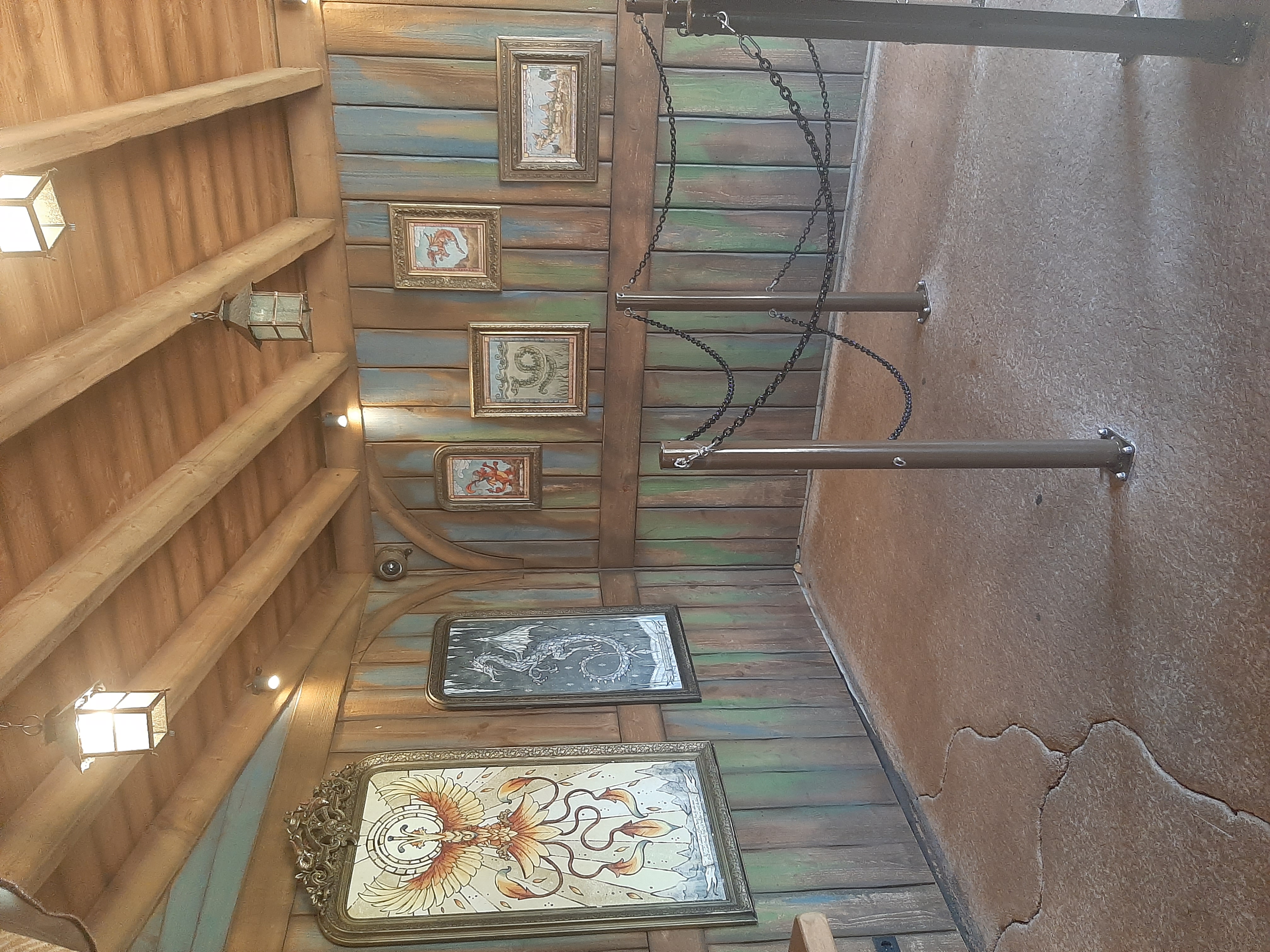
Klugheim, Phantasialand's Viking-themed land, provides a specific example of how a themed land's internal structure functions as a micro-level pacing mechanism. The land's tight, immersive pathways and enclosed spatial structure slow guest movement through the area relative to an open-plaza zone. Guests who enter Klugheim spend more time per unit of distance than they would in a wider, less spatially complex area.
This slowing effect is part of the design intent — it supports the immersive narrative environment by encouraging slower movement and more attentive engagement with the theming. As a pacing mechanism, it has the secondary effect of distributing Klugheim's demand across a longer time window at opening, because guests entering the area move through it more slowly and do not concentrate at the attraction queue entry simultaneously.
The Alt-Berlin entrance and its pacing function
The Alt-Berlin area at Phantasialand's entrance functions differently from the deeper themed lands. It is a transitional zone — thematically consistent with the park's overall approach but spatially open enough to manage the density of guests passing through at park opening and throughout the day.
From a pacing perspective, the entrance area is a decompression zone: guests transition from the ticketing threshold (where crowd density is high and movement is constrained) to the park's interior (where movement is self-directed and spatially distributed). How quickly guests move through this decompression zone affects how rapidly demand builds at the park's interior attractions.
An entrance area that holds guests' attention briefly — through environmental interest, food and beverage provision, or simply spatial complexity — functions as a natural throttle on the rate at which demand moves to interior attractions in the first hour of operation.
Implications for individual attraction queues
The relationship between park-level pacing and individual attraction queue length is direct but time-delayed. A guest who enters the park and moves immediately to the highest-demand attraction contributes to an opening rush queue. A guest who enters the park, moves through the entrance area, pauses for a moment in a themed land, and then approaches an attraction arrives later and to a shorter queue.
Park-level design that creates natural pauses — spatial complexity, environmental interest, strategically positioned amenities — shapes the distribution of guest arrival time at individual queues. This is upstream queue management: it reduces peak queue length at high-demand attractions without adding queue capacity or changing the boarding system.

Eurosat CanCan Coaster entrance — Europa-Park. Shown as reference to European park themed entry approaches. Image: Freddo / Wikimedia Commons
- Wait time data or attendance figures at Phantasialand.
- The specific operational decisions made by Phantasialand management regarding guest distribution.
- Virtual queue, fast pass, or priority boarding products at the park.
- Individual attraction queue design within Phantasialand beyond what is discussed in relation to Klugheim.
- How the park's layout compares to other European parks with similar attendance levels.